
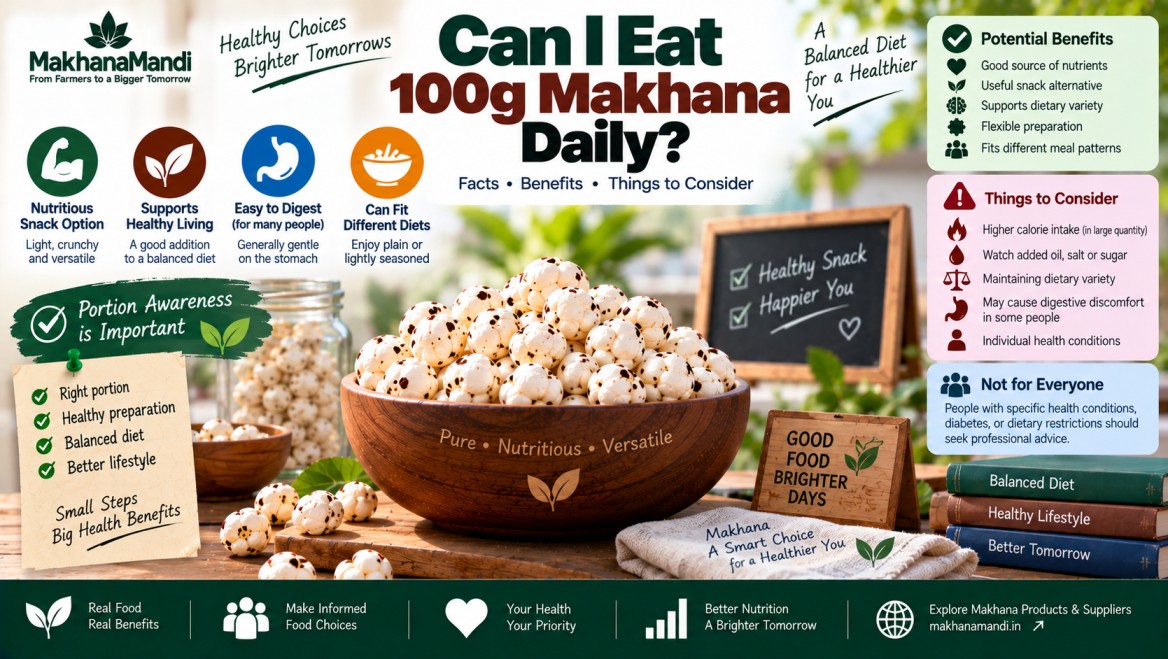
Can I Eat 100g Makhana Daily?
Makhana, also called fox nuts or lotus seeds, has become a popular snack among people looking for healthier alternatives to highly processed foods. Because makhana is light, crunchy and versatile, some people wonder whether eating 100 grams every day is safe.
Short answer: Eating 100g of makhana is not automatically unsafe for every healthy adult, but it may be more than necessary for a regular snack. The appropriate quantity depends on your energy requirements, preparation method, overall diet, health conditions and individual tolerance.
There is no universally established daily serving of makhana that is suitable for everyone. A moderate portion may fit comfortably into many diets, while consuming 100g daily may contribute substantial calories, particularly when the makhana is roasted with oil, sugar, butter or other coatings.
What Does 100g of Makhana Mean?
One important point is whether the 100g refers to plain, dry makhana or a prepared snack. Nutritional values can vary depending on the product, moisture content, roasting method, added ingredients and serving size.
Plain makhana and commercially prepared flavoured makhana should not automatically be treated as nutritionally identical. Oil, sugar, salt, seasoning and coatings can change the energy and nutrient content of the final product.
For more accurate dietary planning, check the nutrition information on the product label where available, and consider the ingredients used during preparation.
Is Eating 100g Makhana Daily Safe?
For many healthy adults, makhana can be included in a balanced diet. However, safety cannot be determined by weight alone. Eating 100g every day may be reasonable for some people in the context of their total food intake, but it may be excessive for others.
The main factors to consider include:
- Total calorie intake: Makhana contributes energy, and the amount matters when managing body weight.
- Preparation method: Added oil, butter, sugar and coatings can increase calories and sodium.
- Dietary variety: Makhana should not replace vegetables, fruits, pulses, whole grains or other nutrient-rich foods.
- Digestive tolerance: Some people may experience bloating or discomfort when they consume large quantities of a particular food.
- Individual health needs: People with specific medical conditions or dietary restrictions may require personalised guidance.
Therefore, 100g should not be presented as a recommended daily target for everyone.
How Much Makhana Should You Eat as a Snack?
A smaller portion may be a practical starting point for people who want makhana as a snack. The right serving depends on hunger, activity level, daily energy requirements and what else is included in the diet.
Instead of automatically consuming 100g, consider measuring a portion and assessing how it fits into your daily food intake. You can adjust the quantity based on your needs and professional dietary advice where appropriate.
A sensible snack should support dietary balance rather than encourage excessive consumption of one food. Makhana can be combined with other foods across the day to maintain variety.
Potential Benefits of Including Makhana in Your Diet
Makhana can be useful as part of a balanced eating pattern. Its benefits depend on the product, preparation method and the rest of the diet.
1. Convenient snack option
Plain roasted makhana is easy to store and prepare. It can be used as an alternative to some heavily processed snack foods, depending on the ingredients and portion size.
2. Can contribute to dietary variety
Makhana can be included alongside vegetables, fruits, pulses, dairy products, nuts, seeds and other foods. A varied diet is more important than relying on a single ingredient.
3. Flexible preparation
Makhana can be roasted or seasoned in different ways. Choosing moderate amounts of oil, salt and sugar can help people manage the overall nutritional profile of the snack.
4. Suitable for different meal patterns
Some people eat makhana between meals, while others use it in recipes. The best use depends on personal preferences, dietary requirements and total food intake.
Possible Disadvantages of Eating 100g Every Day
Higher overall calorie intake
Even foods that are commonly considered healthy can contribute excess calories when consumed in large quantities. If 100g of makhana is added to an existing diet rather than replacing another snack, total daily energy intake may increase.
Added oil and flavourings
Flavoured and roasted makhana products may contain added oil, salt, sugar or other ingredients. The nutritional value of the finished product depends on these additions.
Reduced dietary variety
Eating a large amount of makhana every day may displace other foods that provide different nutrients. A balanced diet should include a range of food groups.
Digestive discomfort
Some individuals may experience digestive discomfort after eating a large portion. If symptoms repeatedly occur, reduce the portion and consult a healthcare professional when appropriate.
Is 100g Makhana Good for Weight Loss?
Makhana should not be considered an automatic weight-loss food. Weight management depends on overall energy balance, dietary quality, physical activity, sleep and other individual factors.
Eating 100g of makhana in addition to regular meals may increase total calorie intake. On the other hand, a measured portion used instead of a higher-calorie snack may fit into a weight-management plan.
Preparation is also important. Large amounts of oil, butter, sugar or calorie-dense coatings can change the energy content of the snack.
People managing their weight should focus on portion awareness and their overall dietary pattern rather than treating one food as a guaranteed solution.
Can People With Diabetes Eat Makhana Daily?
People with diabetes should consider the total carbohydrate content, portion size, preparation method and the rest of their meal plan. Makhana should not automatically be described as a diabetes treatment or as a food that has no effect on blood glucose.
Individual responses can vary. People taking diabetes medication or following a medically prescribed diet should discuss regular consumption and portion sizes with their healthcare professional or registered dietitian.
Can Makhana Be Eaten at Night?
Makhana can be consumed as an evening or nighttime snack if it fits the individual's dietary needs and does not cause discomfort. The time of consumption is generally less important than total food intake, portion size and preparation method.
People who experience indigestion or discomfort at night may prefer a smaller portion or an earlier snack. Personal tolerance should guide the choice.
How to Prepare Makhana for Regular Consumption
- Prefer plain or lightly seasoned makhana when appropriate.
- Measure the quantity instead of eating directly from a large container.
- Use oil, butter, sugar and salt in moderation.
- Check packaged product labels for ingredients and nutrition information.
- Include other food groups throughout the day.
- Store makhana properly to maintain quality and freshness.
Who Should Be More Careful?
People with specific health conditions, allergies, digestive concerns or medically prescribed dietary restrictions should seek personalised advice before making a large quantity of makhana part of their daily routine.
Individuals who are pregnant, managing chronic illness, taking medication that affects their diet or following a restricted eating plan should not assume that a general online serving recommendation applies to them.
Frequently Asked Questions
Can I eat 100g makhana every day?
Some healthy adults may be able to include this quantity within their total dietary needs, but 100g is not a universal daily recommendation. Consider portion size, preparation method, calories and dietary variety.
Is 100g makhana too much?
It may be more than needed for a regular snack, depending on the person's energy requirements and what else they eat. A measured smaller portion may be more practical for many people.
Does eating makhana daily cause weight gain?
Makhana does not automatically cause weight gain. However, consuming more calories than the body uses over time can contribute to weight gain, including when those calories come from makhana or added ingredients.
Can I eat roasted makhana daily?
Roasted makhana may fit into a balanced diet. Pay attention to added oil, salt, sugar and portion size, especially when consuming it regularly.
Is makhana a complete meal?
No. Makhana should not be treated as a complete replacement for a varied diet. Include a range of foods to meet different nutritional needs.
What is the best time to eat makhana?
There is no universally required time. It can be eaten as a snack or included in meals according to personal preference and dietary needs.
Conclusion
Eating 100g of makhana daily is not automatically appropriate for everyone. The suitable quantity depends on total calorie requirements, preparation method, individual health needs and dietary balance.
Makhana can be a useful snack when consumed in a measured portion and prepared thoughtfully. Rather than treating 100g as a fixed daily target, choose an amount that fits your overall diet and personal requirements.
To explore makhana products and suppliers, visit MakhanaMandi listings. You can also check the live makhana price board or explore makhana distributorship opportunities.
Medical disclaimer: This article is for general educational purposes and does not provide medical advice, diagnosis or treatment. Consult a qualified healthcare professional for personalised dietary guidance.
