
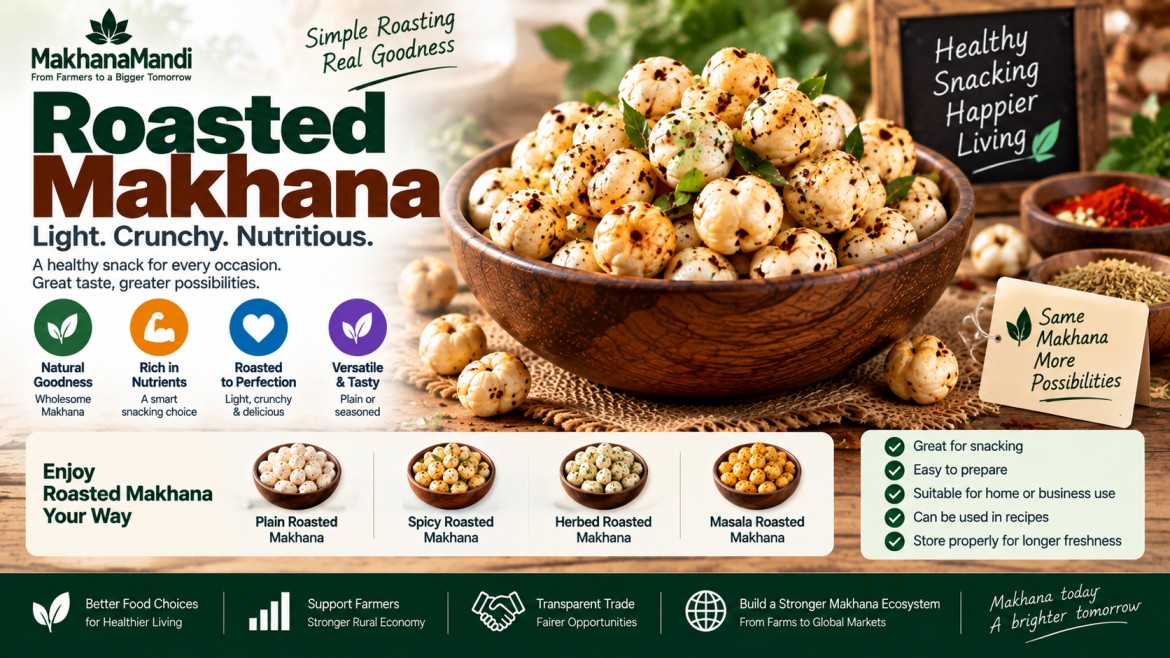
Roasted Makhana is a popular processed form of Makhana in which the product is heated to develop a pleasant roasted character and a crisp or light texture. Roasting can be done at home in small batches or as part of a controlled commercial processing operation.
The final result depends on the raw material, roasting method, heat application, duration, cooling and subsequent storage. For commercial products, consistency is especially important because buyers may expect similar characteristics from one lot to another.
What is Roasted Makhana?
Roasted Makhana is Makhana that has undergone a controlled heating process. The purpose is generally to develop flavour and texture while maintaining the desired condition of the product.
Roasted Makhana can be consumed on its own, seasoned with spices, incorporated into recipes or used as an ingredient in packaged food products. The appropriate roasting approach depends on the intended use and product specification.
What you need to know before roasting Makhana
The starting product matters. Clean, suitably dried Makhana is easier to roast consistently than material with unsuitable moisture or significant variation between pieces.
Size can also influence how quickly pieces respond to heat. Buyers and processors should therefore avoid assuming that one roasting setting will produce identical results for every grade.
For commercial processing, roasting should be treated as a controlled process rather than simply applying high heat until the product appears finished.
How to roast Makhana
1. Check and clean the Makhana
Before roasting, inspect the product and remove visible foreign material or unsuitable pieces. Starting with clean material helps produce a more consistent finished product.
2. Preheat the cooking surface
Use a suitable pan or roasting equipment and allow it to reach an appropriate operating condition. Excessive heat at the beginning can cause uneven roasting or surface damage.
3. Add the Makhana
Place the Makhana into the pan in a quantity that allows effective movement and heat exposure. Overloading the pan can make even roasting more difficult.
4. Roast while stirring
Roast over low to medium heat and stir regularly. The objective is even heat exposure rather than rapid browning.
The required time varies with equipment, batch size, starting condition and product characteristics. There is therefore no single roasting time that should be treated as universal.
5. Check texture and condition
As roasting progresses, check the product for the desired texture and roasted character. Avoid excessive heat that causes burning, darkening or an undesirable flavour.
6. Cool before storage or further use
Allow the roasted Makhana to cool appropriately before placing it into a closed container or packaging. Packing a hot product can create unwanted condensation and affect storage condition.
How roasting affects Makhana
Roasting changes the sensory characteristics of Makhana by developing a roasted flavour and altering its texture. The extent of the change depends on heat intensity, exposure time and the condition of the starting product.
Even heating can help produce a more uniform batch. Excessive heating, on the other hand, can result in burnt pieces or undesirable flavour.
Roasted Makhana and Makhana grade
Roasting and grading are different parts of the product process. Grade generally describes size or a size-related classification, while roasting describes how the product has been processed.
Under the MakhanaMandi grading standard, 1 Suta = 3.17 mm. Whole-number grades represent diameter thresholds, while half grades represent intermediate size bands.
A larger grade does not automatically mean that the roasted product has better overall quality. Cleanliness, consistency, processing condition and other quality characteristics should also be considered.
For a detailed explanation of size classification, see the MMX guide on Jumbo size Makhana.
Roasted Makhana quality considerations
Uniform roasting
Commercial buyers generally benefit from consistent roasting across a lot. Significant variation can affect texture, appearance and the suitability of the product for further processing or retail packaging.
Cleanliness
The finished product should be checked for visible foreign material and unsuitable pieces. Clean handling throughout processing helps protect product quality.
Moisture-related condition
Moisture management remains important after roasting. A product that is packed or stored under unsuitable conditions can lose its desired texture or develop storage problems.
For more on commercial storage considerations, see the MMX guide to Cold storage for Makhana.
Packaging
Packaging should protect the roasted product from moisture, contamination and physical damage. The appropriate format depends on the product, intended shelf life, handling conditions and market.
Roasted Makhana for different uses
Plain roasted Makhana
Plain roasted Makhana can be consumed without additional seasoning or used as a base ingredient. The roasting process itself provides a characteristic flavour and texture.
Seasoned Roasted Makhana
Spices and other flavouring ingredients can be added after or during roasting, depending on the recipe and production method. Seasoning should be distributed evenly so that the finished product has a consistent flavour.
Roasted Makhana in recipes
Roasted Makhana can also be incorporated into cooked dishes. For example, it can be added to a gravy-based preparation when a softer texture is desired. See the MMX guide to Makhana curry for a practical culinary application.
Commercial Makhana roasting
A commercial roasting operation needs greater process control than a small household batch. Capacity, equipment, heat distribution, batch movement, cooling and quality inspection all affect consistency.
A commercial facility may use dedicated roasting or heating equipment as part of a broader workflow that can include cleaning, drying, processing, cooling, grading and packaging.
For a broader overview of commercial processing, see Makhana processing plant.
Common mistakes when roasting Makhana
- Using excessive heat to shorten the roasting process.
- Overloading the pan or roasting equipment.
- Failing to stir or move the product adequately.
- Applying the same roasting conditions to every grade and batch.
- Ignoring the starting moisture or condition of the product.
- Packing the product before it has cooled appropriately.
- Assuming colour alone proves that roasting is complete.
How buyers should evaluate Roasted Makhana
Buyers should look beyond the words “roasted” or “premium” and examine the actual product specification. Useful considerations include grade, appearance, consistency, packaging, quantity, processing condition and commercial terms.
For larger purchases, samples or suitable quality checks can provide better evidence than a general product description.
When comparing current commercial offers, buyers can also review the available MMX listings and check the exact product and seller information rather than relying on an assumed market price.
Roasted Makhana and current market prices
Roasted Makhana is different from the Raw Makhana market represented on the MMX live price board. The live Raw Makhana price methodology is based on qualifying live Seller Listings and should not automatically be applied to every processed or roasted product.
For current Raw Makhana market information, use the MMX Live Makhana Price page and review the underlying listings and specifications.
Frequently asked questions
How is Makhana roasted?
Makhana can be roasted in a suitable pan or commercial roasting equipment using controlled heat and regular movement. The goal is even heating without burning the product.
How long does it take to roast Makhana?
There is no single universal roasting time. It depends on the equipment, batch size, starting condition, grade and desired result. The product should be monitored for texture and roasting condition rather than relying only on a fixed time.
Does roasting change Makhana quality?
Roasting changes flavour and texture and can produce a desirable finished product when properly controlled. Excessive or uneven roasting can negatively affect appearance, flavour and consistency.
Does Makhana grade affect roasting?
Yes. Different sizes can respond differently to heat. Processors should validate roasting conditions for the specific product and equipment rather than assuming one setting works for every grade.
Can Roasted Makhana be used in curry?
Yes. Roasted Makhana can be added to a curry or other cooked preparation. Adding it later in the cooking process can help retain more of its texture.
How should Roasted Makhana be stored?
Roasted Makhana should be protected from moisture, contamination and unsuitable storage conditions. Allow the product to cool appropriately before packaging and use packaging suitable for the intended storage environment.
Key takeaway
Roasted Makhana is produced by applying controlled heat to develop the desired flavour and texture. Good results depend on the starting product, roasting conditions, even heat exposure, cooling and storage. For commercial buyers and processors, grade, quality, consistency and packaging should be considered alongside the roasting method.